Last Updated on November 15, 2026 by ellen
If you enjoy feeding the birds at your bird feeders, check out these wild bird feeding tips. My husband and I feed the birds year round but it’s especially important in the winter time when food is harder to find. We have several different bird feeders and suet feeders in our yard for them.
Posts may be sponsored. This post contains affiliate links, which means I will make a commission at no extra cost to you should you click through and make a purchase. As an Amazon Associate I earn from qualifying purchases.

Table of Contents
Wild Bird Feeding Tips
Different birds eat different types of seeds so it’s important to offer a wide variety of bird food. We typically offer black oil sunflower seeds because it’s the most popular type of seed for the wild songbirds my husband likes to watch. In the winter, we also offer suet because it helps the birds stay warm.
It’s best to offer more than one type of feeder in different areas. Some birds will have no problem visiting a bird feeder on a hook at your window. Others will prefer to visit a smaller feeder that is hung on the brand of a tree for cover.
What to Feed Wild Birds in Winter
Winter can be a challenging time for backyard birds, especially when snow and ice make natural food sources harder to reach. Offering a variety of nutritious foods can help attract different species to your feeders.
Here are some good options for feeding wild birds during cold weather.
Black oil sunflower seeds: These are a favorite of many backyard birds, including chickadees, cardinals, finches, and nuthatches. Their relatively thin shells make them easier for smaller birds to open.
Suet: Suet is a high-energy food that is especially useful during colder months. Woodpeckers, nuthatches, and chickadees are among the birds that may visit suet feeders.
Peanuts: Unsalted peanuts are another energy-rich option. Offer shelled or chopped peanuts in a feeder designed for them. Avoid salted, seasoned, or moldy nuts.
Nyjer seed: Small finches, including goldfinches, may visit feeders filled with nyjer seed. Use a feeder with small openings designed to hold these tiny seeds.
Millet: White proso millet can attract ground-feeding birds such as juncos and sparrows. Offer small amounts in a suitable tray feeder and clean up leftovers to avoid attracting rodents.
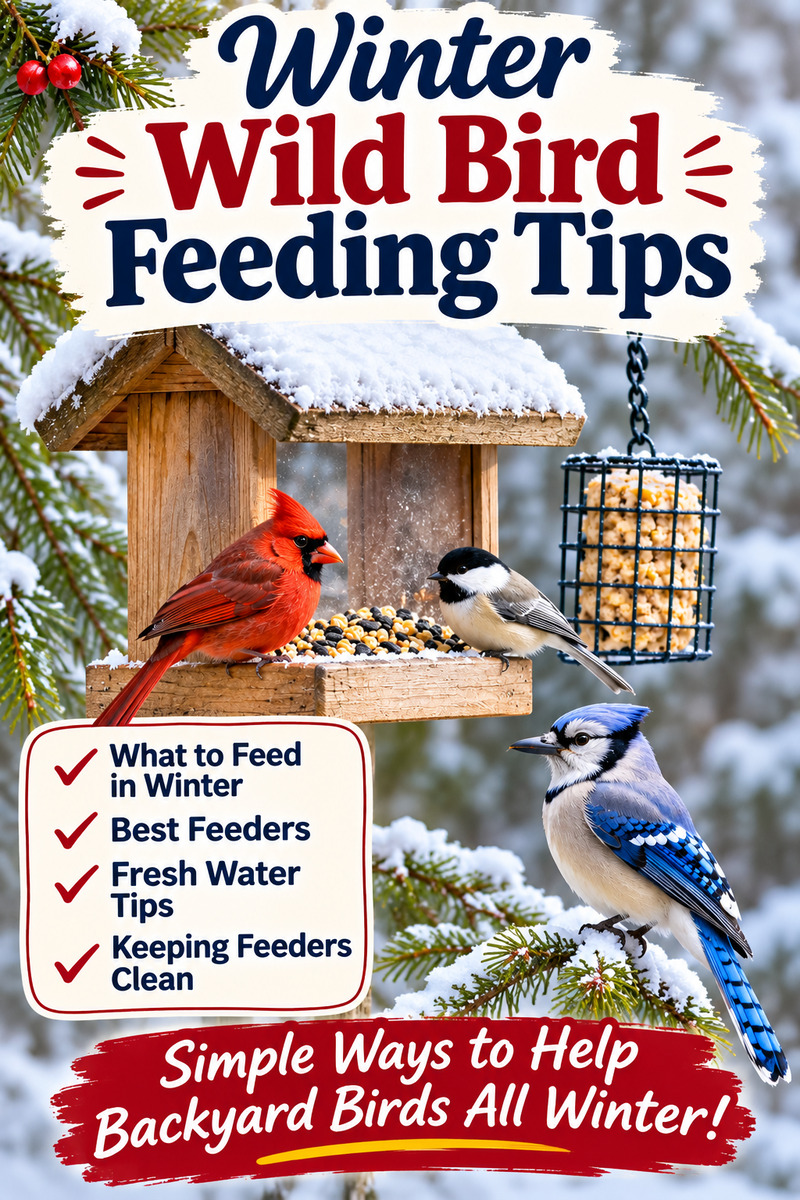
Don’t Forget Fresh Water
Birds need access to drinking water during winter, too. When natural water sources freeze, a clean birdbath can be helpful.
A birdbath heater designed for outdoor use can help keep water from freezing during cold weather. Follow the manufacturer’s electrical safety instructions and clean the birdbath regularly.
Avoid adding salt, antifreeze, or other chemicals to the water.
Keep Bird Feeders Clean
Regular feeder cleaning helps reduce the spread of diseases among backyard birds.
Remove old seed, discarded hulls, and droppings. Wash feeders regularly, following appropriate cleaning and disinfecting instructions, and allow them to dry completely before refilling.
If you notice sick or dead birds around your feeders, temporarily take the feeders down and follow guidance from your state wildlife agency.
Keeping the ground beneath feeders clean is important, too. Accumulated seed can attract rodents and other unwanted wildlife.

It’s best to offer different types of bird food in different feeders. Sunflower seeds are the most popular with many birds.
If you offer a mixed seed in one feeder, many birds will toss the millet and the corn on the ground in order to get to the sunflower seeds.
Can wild birds eat raspberries?
Some birds enjoy fruit so we occasionally offer a sliced orange so birds like Orioles can have a treat. Other birds like robins enjoy berries so raspberries and strawberries that are overripe or bruised make perfect treats.
If you plan on storing your extra seed outside, make sure that you store it in a metal container with a tight-fitting lid. Pests like mice, rats, raccoons, and skunks will be attracted to bird seed and will make a huge mess.

Squirrels will be attracted to the seed in your feeder, and they are quite good at getting into them. To prevent this, you can use a baffle on the pole.
Or try mixing Squirrel Away in with the bird food. They don’t like this powder but it has no effect on the birds at all.
Related reading

Ellen runs a small pet sitting business in southern Vermont. She has experience with a variety of small animals, dogs and cats. She has also cared for ducks, chickens and rabbits. Combined, she has over 20 years of experience in pet care and pet sitting.