Last Updated on October 20, 2026 by ellen
You arrive for a pet-sitting visit, put down the cat’s food, and look around. The cat is nowhere to be found. You check the living room, glance under the bed, and call their name. Nothing.
Posts may be sponsored. This post contains affiliate links, which means I will make a commission at no extra cost to you should you click through and make a purchase. As an Amazon Associate I earn from qualifying purchases.
If you’re pet sitting a shy cat, this can be a familiar situation. Some cats greet visitors at the door, while others disappear as soon as someone unfamiliar enters their home.
The good news is that a cat hiding from a pet sitter isn’t necessarily a problem. However, you still need to make sure the cat is safe, eating, drinking, and using the litter box.
Here’s what to do when a cat hides while you’re pet sitting, including how to check on them without making them more frightened.
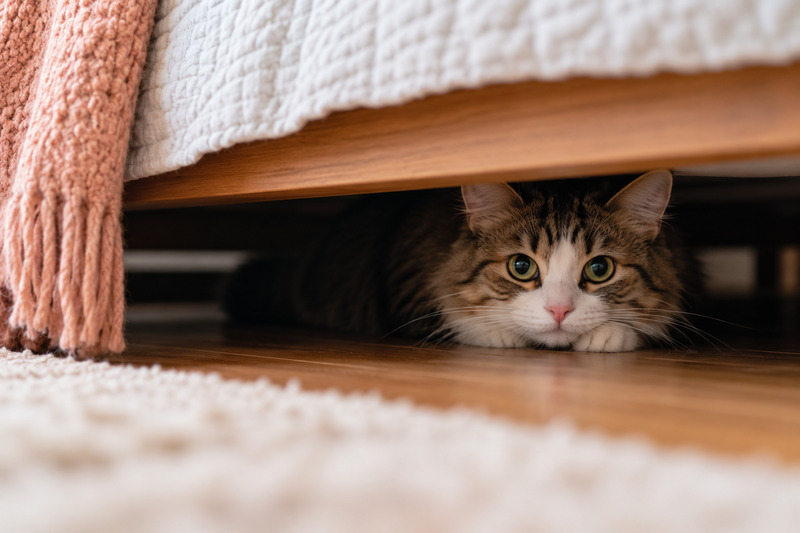
Table of Contents
Why Do Cats Hide From Pet Sitters?
Cats often hide because they feel safer in a quiet, enclosed space. Even a friendly cat may behave differently when their owner is away.
Some common reasons a cat might hide include:
- An unfamiliar person: The cat doesn’t recognize your voice, scent, or movements.
- Changes in routine: Their owner is away, and someone new is providing their meals.
- A naturally shy personality: Some cats are uncomfortable around visitors.
- Loud noises or activity: Vacuum cleaners, deliveries, storms, and other disruptions can cause a cat to retreat.
- Stress or illness: A cat that suddenly starts hiding may not be feeling well.
If the owner tells you their cat usually hides from strangers, this behavior may be completely normal.
However, if the cat is usually outgoing and suddenly refuses to come out, it’s important to pay closer attention.
1. Start by Checking the Cat’s Usual Hiding Places
Before your first pet-sitting visit, ask the owner where their cat likes to hide.
Common hiding spots include under beds, behind couches, inside closets, beneath furniture, and in cat trees with enclosed compartments.
When you arrive, quietly check the places the owner mentioned.
If you spot the cat, don’t immediately reach for them or try to pull them out. Instead, observe their behavior from a comfortable distance.
Look for signs that the cat is alert, breathing normally, and able to move comfortably.
If you can’t locate the cat, check that doors and windows are secure. Look carefully in safe, accessible areas without moving heavy furniture or creating a frightening disturbance.
Never assume a cat is inside simply because the doors were locked when you arrived.
2. Don’t Force the Cat to Come Out
One of the biggest mistakes a pet sitter can make is trying to pull a frightened cat out of a hiding place.
Even a normally gentle cat may scratch or bite if they feel trapped.
Instead, give the cat space.
Sit quietly in the room for a few minutes. Avoid staring directly at the cat or repeatedly reaching toward them.
You can speak softly so they become familiar with your voice.
If the cat feels safe, they may eventually come out on their own. If they don’t, that’s okay.
Your job isn’t necessarily to make the cat socialize with you. It’s to keep them comfortable and properly cared for while their owner is away.

3. Keep the Cat’s Routine as Normal as Possible
Cats often feel more comfortable when their daily routine stays consistent.
Follow the owner’s instructions for feeding times, portion sizes, medication, and litter box care.
Try to keep the environment quiet and predictable.
Avoid rearranging furniture, inviting visitors into the home, or introducing unfamiliar toys and treats without permission.
If the owner has provided a favorite treat, you can place it near the cat’s usual safe area without forcing an interaction.
Don’t withhold food or move essential supplies to make the cat come out.
A shy cat may wait until you leave before approaching their food bowl.
4. Check Whether the Cat Is Eating and Drinking
One of the most important things to do when pet sitting a hiding cat is monitor their food and water.
A cat may be too nervous to eat while you’re in the room, but they should still have access to fresh food and water according to their normal routine.
Before leaving, note how much food is in the bowl. Check it again during your next visit.
If you’re caring for multiple cats, remember that an empty bowl doesn’t prove the hiding cat has eaten.
You can also ask the owner whether they use a pet camera or have a way to monitor each cat’s meals.
Contact the owner promptly if the cat isn’t eating or drinking normally. A cat that has gone approximately 24 hours without eating needs prompt veterinary guidance, and kittens, senior cats, or cats with medical conditions may need attention much sooner.
Don’t wait for the next scheduled visit if you’re concerned.

5. Monitor the Litter Box
The litter box can provide useful clues about a cat’s health, even if you rarely see the cat.
During each visit, check and clean the litter box according to the owner’s instructions.
Pay attention to whether you’re finding a normal amount of urine and stool.
If there’s only one cat in the home, it may be easier to tell whether they’re using the box.
For households with multiple cats, it can be harder to determine which cat is responsible.
If the cat is straining to urinate, repeatedly visiting the litter box without producing urine, crying in pain, or showing other signs of a urinary blockage, seek emergency veterinary care immediately.
Also report unusual vomiting, diarrhea, or other concerning changes to the owner.
6. Use Treats or Toys Only if the Cat Is Interested
Some shy cats become curious when you offer a favorite treat or gently move a familiar wand toy.
However, not every hiding cat wants to play.
Ask the owner which treats and toys are safe and familiar.
Place a treat nearby or quietly offer a toy without pushing it into the cat’s hiding space.
If the cat shows no interest, leave them alone.
Avoid making loud noises, shaking treat containers repeatedly, or trying to lure the cat into a place where they might feel trapped.
Building trust with a shy cat can take several visits, and some cats may never want to interact with a temporary caregiver.
That’s perfectly fine as long as their care and safety needs are being met.
7. Send the Owner an Update
Pet owners may worry when they hear that their cat is hiding, especially if they’re away for several days.
A brief, factual update can help reassure them.
For example:
“Your cat is staying under the bed today, but I was able to see them and they appear alert. I refreshed their food and water, cleaned the litter box, and made sure everything was secure. I’ll keep monitoring their eating and litter box habits.”
If you haven’t actually seen the cat, be clear about that.
You might say:
“I haven’t been able to locate your cat during today’s visit. I’ve checked their usual hiding places and confirmed that the doors and windows are secure. Have they used any other hiding spots before?”
Never tell an owner their cat is fine if you haven’t been able to verify that.
If you’re unable to locate the cat, follow the owner’s instructions and take additional steps to confirm the cat’s safety rather than relying on food or litter box changes alone.
Keeping detailed notes during each pet-sitting visit makes it easier to spot changes in a pet’s behavior and give owners accurate updates. My Pet Sitter’s Logbook is designed to help pet sitters stay organized and keep important care information in one place. You can find The Pet Sitter’s Logbook on Amazon.
8. Know When Hiding Could Be a Warning Sign
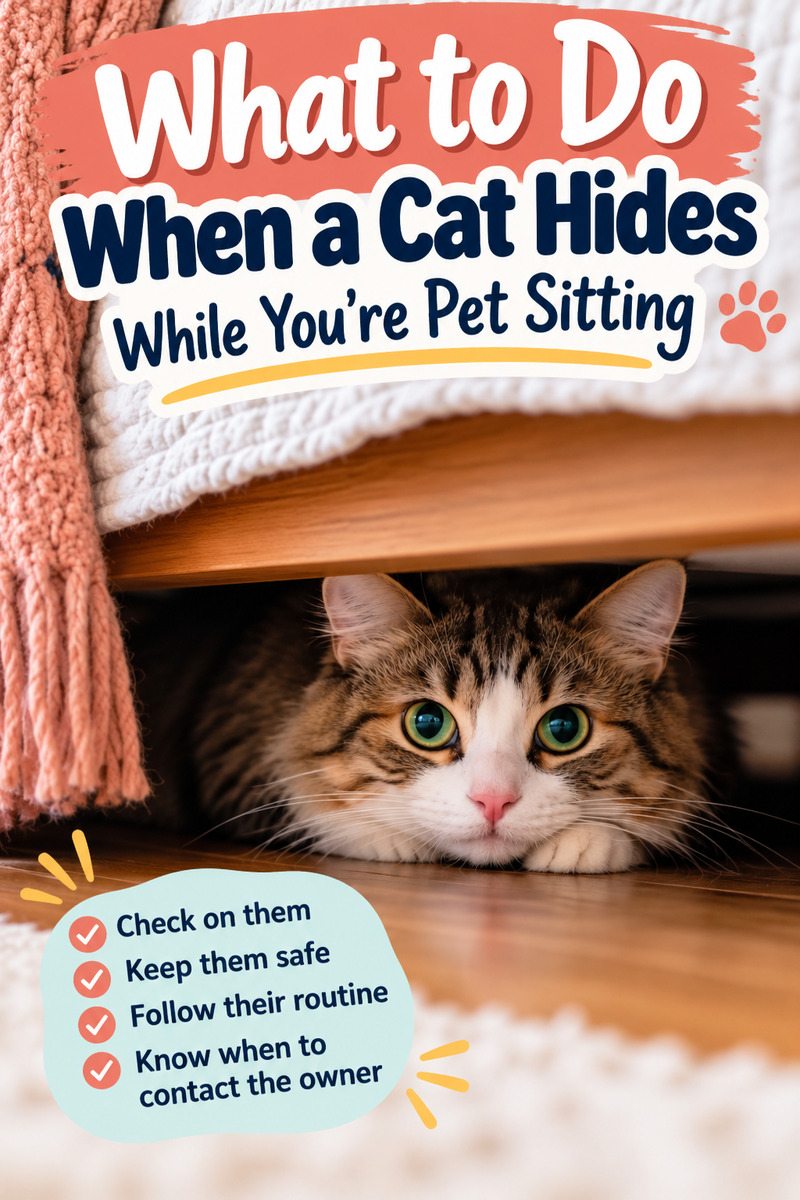
While hiding is often a normal response to an unfamiliar pet sitter, it can sometimes indicate a medical problem.
Contact the owner and arrange veterinary guidance if you notice:
- A sudden change from the cat’s usual behavior
- Refusal to eat or drink
- Unusual weakness or difficulty walking
- Repeated vomiting or significant diarrhea
- Signs of pain or distress
- Abnormal litter box habits
- A cat that cannot be located or accounted for
Difficulty breathing, collapse, or suspected urinary blockage requires emergency veterinary care.
Follow the owner’s emergency instructions and contact their veterinarian or emergency clinic as appropriate.
How to Prepare for Pet Sitting a Shy Cat
If you know ahead of time that a cat is shy, a little preparation can make your visits easier.
Before the owner leaves, ask these questions:
- Where does your cat usually hide?
- Is it normal for your cat to avoid visitors?
- How can I confirm that your cat is safe if they don’t come out?
- What are their usual feeding and litter box habits?
- Do they have any medical conditions or medications?
- Are there treats or toys that help them feel comfortable?
- What should I do if I cannot find them?
- Who should I contact in an emergency?
Make sure you have the veterinarian’s contact information, emergency care instructions, and any necessary authorization before the owner leaves.
These details can save valuable time if something unexpected happens.
Should You Stay Longer if the Cat Won’t Come Out?
Not necessarily.
If the cat is frightened by your presence, staying longer may actually make them more uncomfortable.
Complete the care tasks the owner requested, confirm the cat’s safety as best you can, and give them a quiet environment.
If the owner has requested companionship visits, you can spend some time sitting quietly in the room without pressuring the cat to interact.
The right approach depends on the cat’s personality and the owner’s instructions.
Final Thoughts on Pet Sitting a Hiding Cat
Finding a cat hiding under the bed or behind the couch can make a pet sitter nervous, especially during the first visit.
But a shy cat doesn’t necessarily need to be coaxed out of hiding.
The most important things are to respect their space, follow their routine, monitor their food and litter box habits, and keep the owner informed.
With patience and a calm approach, you can provide excellent care for a cat that prefers to stay out of sight.
And sometimes, after several quiet visits, that shy cat may surprise you by coming out to say hello.
Learn how to win over a shy dog and see if these tips will help with cats.

Ellen runs a small pet sitting business in southern Vermont. She has experience with a variety of small animals, dogs and cats. She has also cared for ducks, chickens and rabbits. Combined, she has over 20 years of experience in pet care and pet sitting.